Iran-US Geopolitical Showdown: Rising Tensions Explained
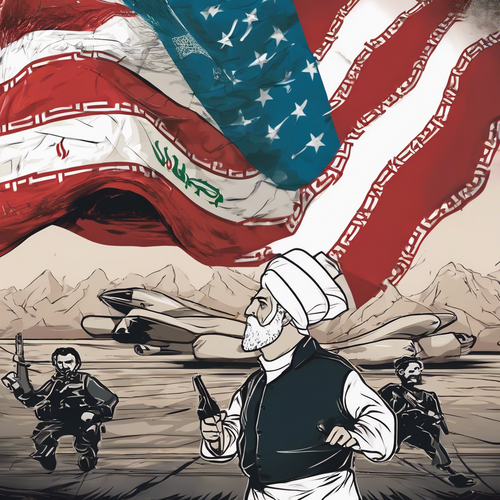
They Crossed the Very Big Red Line: Iranian Foreign Minister Responds to US Attacks
In a chilling response to recent military actions by the United States, Iranian Foreign Minister Hossein Amir-Abdollahian declared, “They crossed the very big red line.” This stark warning comes amidst escalating tensions between Iran and the West, marking a pivotal moment in geopolitical discourse that reverberates across the Middle East 🌍.
The backdrop of this heightened rhetoric is a series of airstrikes attributed to U.S. military forces targeting Iranian proxies in Iraq and Syria, aimed ostensibly at curbing the influence of Tehran in the region. These aggressive maneuvers have ignited a firestorm of criticism from Tehran, where leaders view them as direct provocations that threaten national sovereignty and stability
.
Contextualizing the Current Conflict
The recent U.S. actions come on the heels of a fraught period for Iran, characterized by strict sanctions and a stalling nuclear deal. The Biden administration’s approach has shifted from a focus on diplomacy to a more militaristic stance, prompting Iran to reassess its strategies for regional engagement. According to data from the International Institute for Strategic Studies, Iranian military influence in countries like Iraq and Syria has been steadily growing, posing significant challenges to U.S. interests.
“The US has unleashed a wave of violence, and these strikes violate international norms,” warned Amir-Abdollahian in a televised address, reinforcing Iran’s determination to respond firmly to perceived aggressions. ⚔️
The Implications of Escalation
Experts warn that the current tensions could spiral into a broader conflict. The Pentagon’s recent reinforcement of security in the Persian Gulf and statements highlighting the readiness to counter hostile actions reflect a strategy rooted in confrontation. University of Tehran’s International Relations expert, Dr. Mohsen Moshfegh, noted, “Both sides appear to be engaged in a dangerous game of tit-for-tat, risking miscalculation that could lead to a hot war.”
Compounding these tensions is the ongoing humanitarian crisis in the region, with groups like the UN Human Rights Council calling for de-escalation and dialogue. Recent reports indicate that over 3 million people in Syria alone are experiencing severe hardships due to ongoing conflicts, exacerbated by military strikes and air campaigns 💔.
Iran’s Military Posturing and Regional Impact
In light of the escalating rhetoric and military actions, Iran has been bolstering its defense capabilities and asserting its influence in neighboring regions. The IRGC (Islamic Revolutionary Guard Corps) has been particularly vocal, vowing to retaliate against any threats. In a recent address, General Hossein Salami, the commander of the IRGC, stated, “Our enemies must understand that we will protect our allies and our territory at any cost.”
- Regional Alliances: Iran’s support for militant groups in Iraq, Syria, and Lebanon has created a complex web of alliances, prompting concerns from Israel and Saudi Arabia, both of whom view Iran as an existential threat.
- Proxy Warfare: Iran’s strategy often relies on proxy forces, complicating U.S. military responses and creating a shadow war that is not easily quantifiable.
- Energy Security: Any major conflict in the region inevitably raises stakes concerning oil supplies and global energy markets, creating ripple effects that reach economies worldwide. ⚡
The Global Arena: A Call for Diplomacy
While military responses may dominate current narratives, many observers argue that the solution lies in renewed diplomatic efforts. Political analysts advocate for a recommitment to the Joint Comprehensive Plan of Action (JCPOA), suggesting that dialogue remains the best path to de-escalation. Former U.S. official and current analyst at the Brookings Institution, Ken Pollack, remarked, “A balanced approach combining both firm deterrence and a return to negotiations could prevent a larger crisis.”
In Conclusion: Navigating the Future
As the world watches with bated breath, the Iranian Foreign Minister’s assertions highlight not only a national sentiment of resistance but also a broader struggle for influence in a region marked by complexities and unpredictability. The crossroads at which Iran and the U.S. find themselves may dictate the geopolitical landscape for years to come. With both nations poised for potential confrontation, one can only hope that a pathway to peace can emerge amidst the chaos. 🕊️


Post Comment
You must be logged in to post a comment.